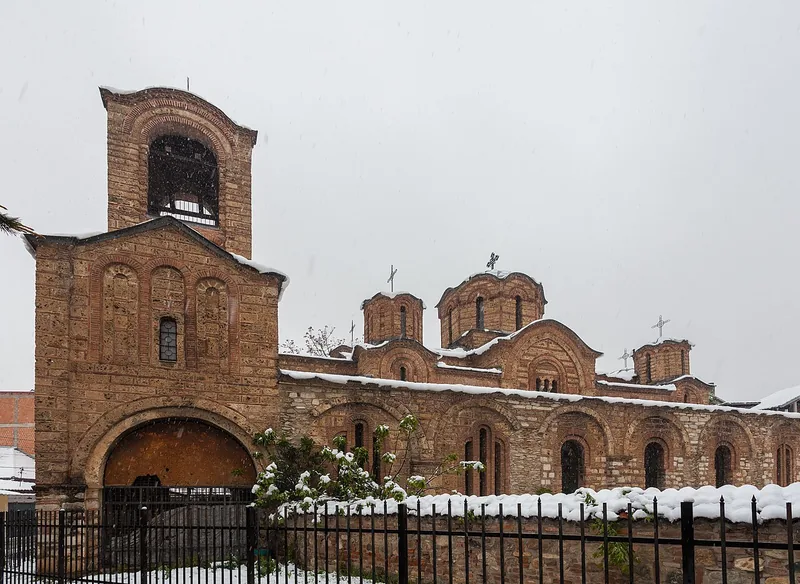
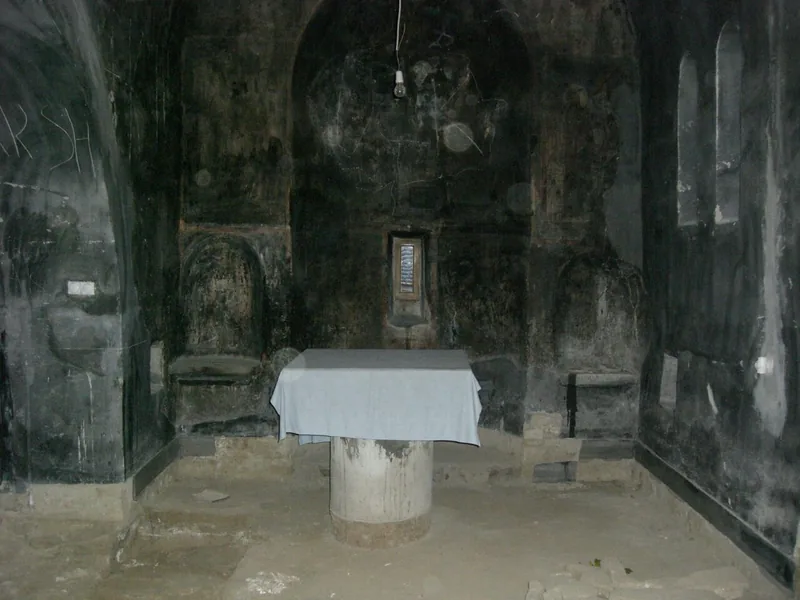
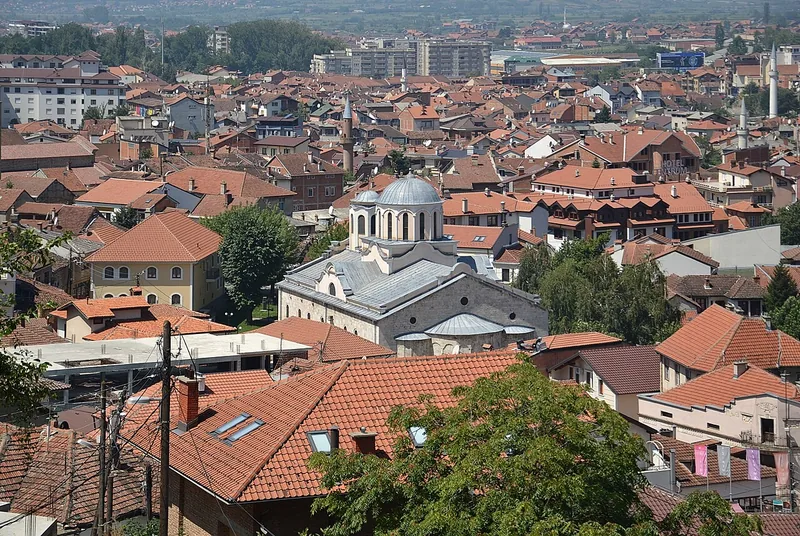
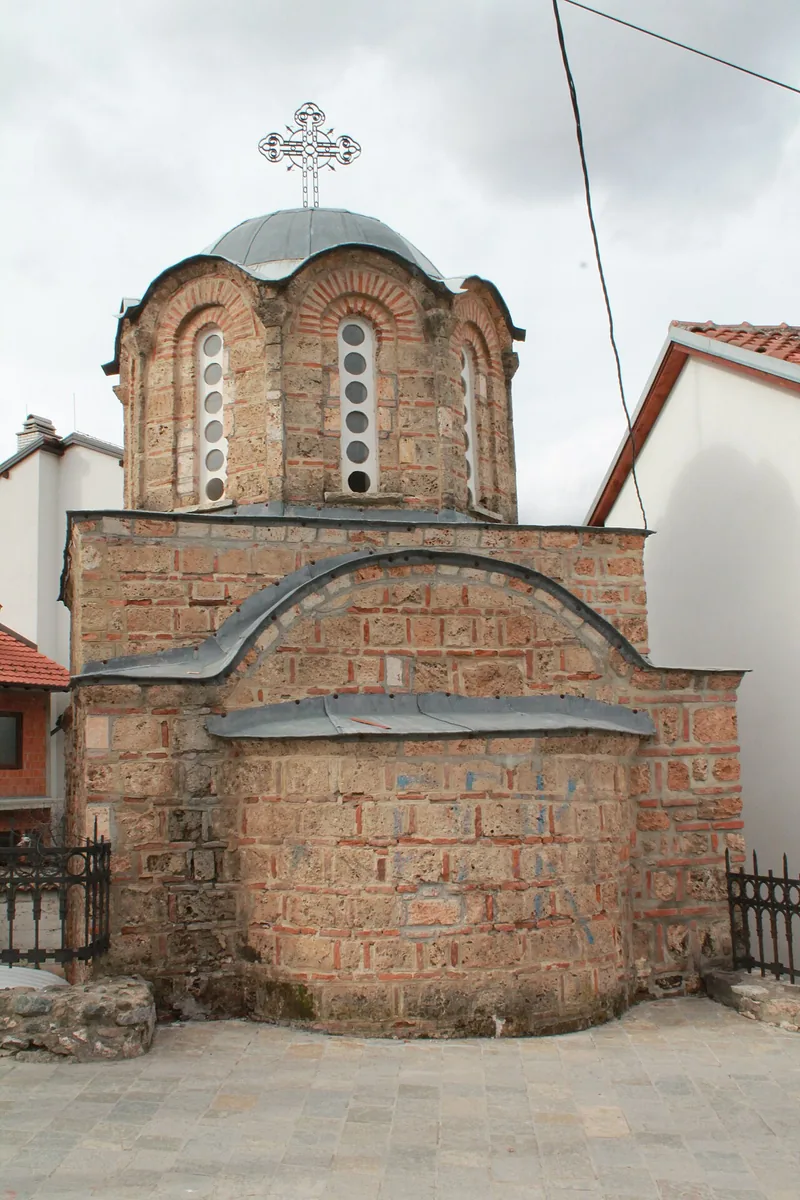
The reconstruction programme overseen by the Reconstruction Implementation Commission (RIC) covered 34 Serbian Orthodox religious sites damaged or destroyed during the March 2004 riots, as surveyed by three joint Council of Europe and European Commission technical assessment missions between May and July 2004. This institutional scope does not represent the total number of Serbian Orthodox churches and monasteries damaged between 1999 and 2004, nor is it identical to the 35 numbered entries in the 2009 RIC website catalogue, which also includes the Atelier, Gallery and Museum of Agim Çavdarbasha (#28) and lists the Prizren Episcopal Residence (#14) separately. Implementation progressed from emergency protection of 30 sites in 2005 to multi-year structural and conservation works in 2006–2009.
The May–July 2004 Technical Assessment Missions and priority setting
Primary RIC and Council of Europe records draw a clear boundary between the wider heritage destruction that occurred in Kosovo between 1999 and 2004 and the specific institutional mandate established after the March 2004 unrest. Following the March 2004 riots, 34 Serbian Orthodox religious sites were identified for the international assessment programme initiated at the invitation of UNMIK. In response, the Council of Europe’s Directorate for Culture and Cultural and Natural Heritage (DGIV) launched the 'Emergency Action Plan for the Cultural Heritage in Kosovo' in close partnership with the European Commission and UNMIK.
From May to July 2004, three joint technical assessment missions were conducted by experts from the Council of Europe, the European Commission, the Kosovo Provisional Institutions of Self-Government (PISG), Belgrade-affiliated specialists, and representatives of the Serbian Orthodox Church. These missions produced an overall technical assessment report covering all 34 sites and two additional detailed technical assessment reports for each individual site, establishing a priority list with cost estimates and technical proposals for urgent protective interventions as well as medium- and long-term conservation measures.
Alongside the 34-site emergency programme, the Council of Europe pursued a broader regional strategy by persuading the Serbian Orthodox Church to add 11 of its monuments to the 'Prioritised Intervention List' within the Regional Programme for Cultural and Natural Heritage in South East Europe, thereby integrating them into a balanced list of monuments across the region.
Capital funding and annual phases of implementation (2005–2009)
The archived and pages document both the initial 2004 budget allocations and the cumulative capital funding recorded by 2009. Immediately following the 2004 technical assessments, the PISG allocated €3.7 million from its budget and the Acting Special Representative of the UN Secretary-General (SRSG) provided an additional €0.5 million from the SRSG reserve fund. In the 2009 summary of capital funding, the RIC records that €6 million had been committed by the Kosovo Assembly since 2004, while €2 million was committed by the European Agency for Reconstruction (EAR) to manage and complete reconstruction works at two RIC priority complexes in Prizren (the Orthodox Seminary of Sts Cyril and Methodius and the Episcopal Residence). Additional targeted contributions came from the US Office in 2005 (€35,000) and the US Ambassador’s Fund for Cultural Preservation in September 2007 (US$65,000), alongside US Embassy, German Embassy, and USAID/IOM donations for furnishing the reconstructed parish houses in Pristina and Vučitrn/Vushtrri.
Field implementation unfolded in distinct annual phases agreed between the RIC and the Serbian Orthodox Church. During the first operational season in late 2005, the programme focused on emergency conservation, structural consolidation, and physical protection across 30 sites—installing lead or temporary protective roofs, clearing fire debris, replacing destroyed doors and windows, and erecting perimeter fencing.
In 2006, the RIC transitioned to its second phase: major structural reconstruction and restoration of priority monuments. According to the achievements summary in, 8 sites were prioritised for reconstruction project implementation in 2006 (with the Serbian overview text also noting a core focus on 7 major reconstruction sites during that year), 13 sites were prioritised for reconstruction projects in 2007, 9 sites were identified for further prioritised works in 2008, and 4 sites had projects prepared for tender in early 2009.
Why site numbers differ across sources: 34 religious sites, 35 catalogue items, and broader damage lists
A central methodological challenge when consulting documentation on post-2004 heritage recovery is explaining why different authoritative records cite different numbers of monuments. Rather than artificially harmonising these figures, historical analysis requires identifying exactly what each document counts and at what date.
The figure of 34 religious sites represents the formal institutional mandate of the RIC for Serbian Orthodox sites, consistently stated on the RIC home page, in its mandate description, and in the Council of Europe’s May 2010 report. By contrast, the archived May 2009 catalogue lists 35 numbered entries (01 through 35). Examination of all 35 site dossiers resolves the discrepancy: entry #28 is the Atelier, Gallery, Museum Agim Çavdarbasha in Çagllavicë/Čaglavica, the house and studio of an Albanian sculptor damaged by fire in March 2004, which the dossier notes was handed over to the Ministry of Culture, Youth and Sports in 2005. The remaining 34 numbered catalogue entries are Serbian Orthodox sites, within which the Episcopal Church of St George (#04) and the Episcopal Residence (#14) in Prizren are numbered separately (whereas lists 8 Prizren entries without a separate line for the Episcopal Residence).
Furthermore, neither 34 nor 35 represents the total number of Serbian Orthodox churches, monasteries, parish buildings, or cemeteries damaged in March 2004 or across the 1999–2004 period. Several single RIC entries encompass multi-building complexes (such as the Prizren Seminary #12 with four main buildings or Devič Monastery #03 with a church, three konaks, and a refectory), while the dossier for the Cathedral of the Holy Trinity in Đakovica/Gjakovë (#24) explicitly records that the building was destroyed in summer 1999 and its ruins removed in March 2004.
| Source | Document Date | Number Cited | What is Counted and Methodological Scope |
|---|---|---|---|
| RIC & | May 2009 | 34 religious sites | Serbian Orthodox religious sites under the formal post-March 2004 RIC mandate. |
| Council of Europe Report (ACFC) | 31 May 2010 | 34 sites | Confirms RIC responsibility for 34 Serbian Orthodox religious sites damaged or destroyed in March 2004. |
| RIC Catalogue | May 2009 | 35 numbered entries | 34 Serbian Orthodox entries (including #04 and #14 in Prizren) + #28 Atelier Agim Çavdarbasha (handed over to MCYS in 2005). |
| RIC & | 2005 / May 2009 | 30 sites (in 16 tender groups) | Sites where the RIC executed Phase 1 emergency protective interventions in 2005 (excluding EAR sites #12 & #14, and #02 & #24 lacking consensus). |
| CoE Regional Programme (RPSEE) | 2004 | 11 SOC monuments | Serbian Orthodox monuments added to the broader Prioritised Intervention List of the CoE Regional Programme in South East Europe. |
| Broader Church & international reports | 1999–2012 | 150+ sites (1999–2004) | Wider inventories of churches, monasteries, chapels, and cemeteries damaged or destroyed across 1999 and 2004 outside the RIC programme scope. |
Documented case study from RIC records: distinguishing 1999 and 2004 damage in Đakovica/Gjakovë (#24 and #26)
Two RIC dossiers from Đakovica/Gjakovë illustrate why individual site records must be read alongside aggregate statistics. In the dossier for the Cathedral of the Holy Trinity (#24), the 2004 Damage Assessment states: 'Destroyed in summer 1999, In March 2004 the ruins were removed from the site.' From 2005 to 2008 no interventions were carried out due to lack of consensus, with only a perimeter wall programmed for 2009. Conversely, the Church of the Assumption of the Holy Virgin (#26) was burned and demolished in March 2004; there the RIC cleared the site in 2005, built stone perimeter walls and gates in 2006, reconstructed the parish house and guest house in 2007–2008, and programmed the reconstruction of the church and a new iconostasis for 2009.
Frequently Asked Questions
Why does the 2009 RIC catalogue contain 35 numbered entries when the RIC mandate covered 34 Serbian Orthodox sites?
Catalogue entry #28 is the Atelier, Gallery, Museum of Albanian sculptor Agim Çavdarbasha in Çagllavicë/Čaglavica, which was assessed after the March 2004 fire and handed over to the Ministry of Culture, Youth and Sports in 2005, while the remaining 34 entries are Serbian Orthodox sites.
Why were emergency protective works in 2005 carried out on 30 sites rather than all 34?
Of the 34 Serbian Orthodox entries, two complexes in Prizren (#12 Seminary and #14 Episcopal Residence) were managed directly by the European Agency for Reconstruction (EAR), and two sites (#02 Holy Archangels and #24 Holy Trinity Cathedral in Đakovica/Gjakovë) had no interventions in 2005 due to lack of consensus—leaving exactly 30 sites protected by the RIC in 2005.
Who participated in the May–July 2004 technical assessment missions?
Three joint technical assessment missions were conducted by experts from the Council of Europe, the European Commission, the Provisional Institutions of Self-Government (PISG), Belgrade-affiliated specialists, and representatives of the Serbian Orthodox Church.
What funding commitments are documented in the RIC records?
In 2004, the PISG allocated €3.7 million and the SRSG reserve fund provided €0.5 million. By 2009, the RIC Mechanism record cites €6 million committed by the Kosovo Assembly since 2004, €2 million from the European Agency for Reconstruction (EAR) for two Prizren priority sites, €35,000 from the US Office (2005), and US$65,000 from the US Ambassador's Fund for Cultural Preservation (2007).
Does the 34-site RIC list represent all Serbian Orthodox churches damaged in Kosovo between 1999 and 2004?
No. The 34 sites represent the specific post-March 2004 programme mandate of the RIC and do not encompass all churches, monasteries, or cemeteries damaged across Kosovo between 1999 and 2004.
Sources and Further Reading
- EU/CoE Support to the Promotion of Cultural Diversity in Kosovo (PCDK) & Previous Reconstruction Action — Council of Europe (Directorate of Culture and Cultural and Natural Heritage) (2010–2014) · Source document ↗
- Report Submitted by UNMIK Pursuant to Article 2.2 of the Agreement Between UNMIK and the Council of Europe Related to the Framework Convention for the Protection of National Minorities (ACFC/SR/II(2009)002) — Council of Europe / UNMIK (31. maj 2010.) · Source document ↗
- OSCE Mission in Kosovo Report on Cultural Heritage Protection and Reconstruction Process (Document 74597) — OSCE Mission in Kosovo (2008–2010) · Source document ↗
- Episkopi Atanasije i Teodosije primili šefa UNMIK-a i komandanta KFOR-a u manastiru Gračanica — Diocese of Raška and Prizren (Serbian Orthodox Church) (2. mart 2010.) · Source document ↗
- RIC Archival Page: The Background / Uvod — Reconstruction Implementation Commission (RIC) — archival snapshot (17. maj 2009.)
- RIC Archival Page: Current Activities / Trenutne aktivnosti — Reconstruction Implementation Commission (RIC) — archival snapshot (april 2009.)