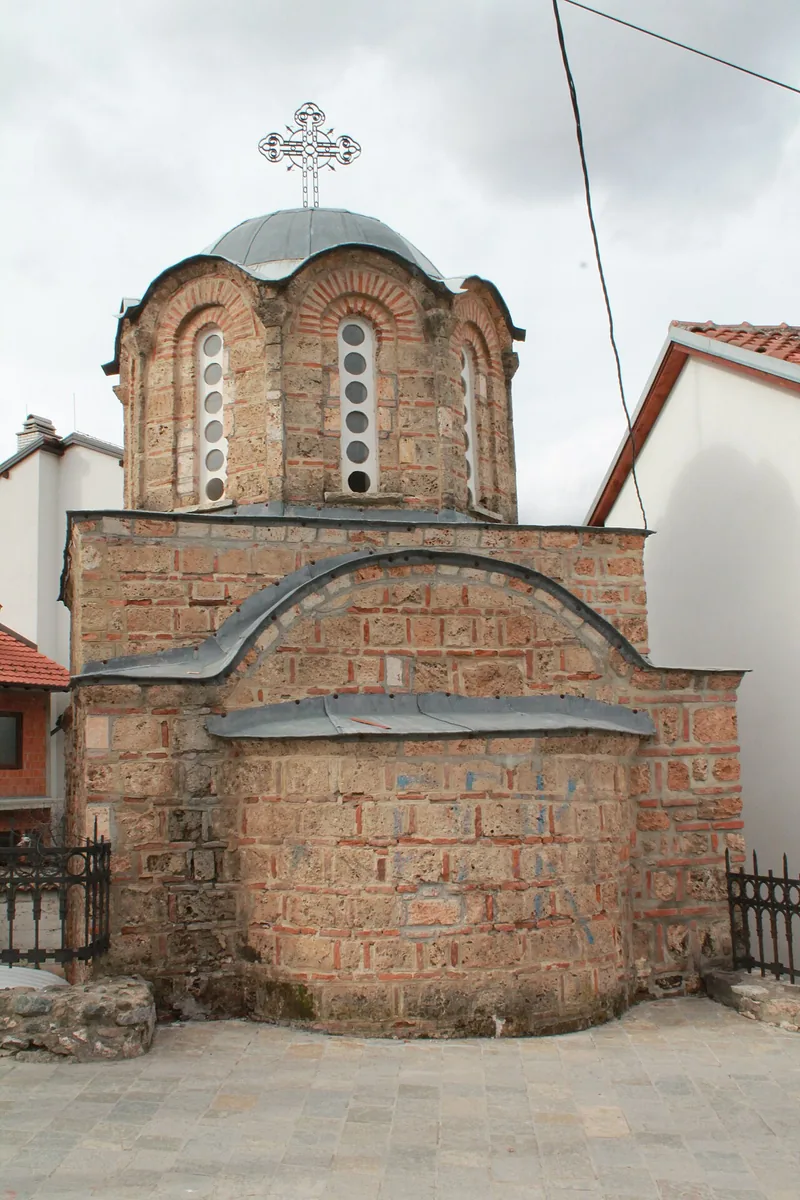
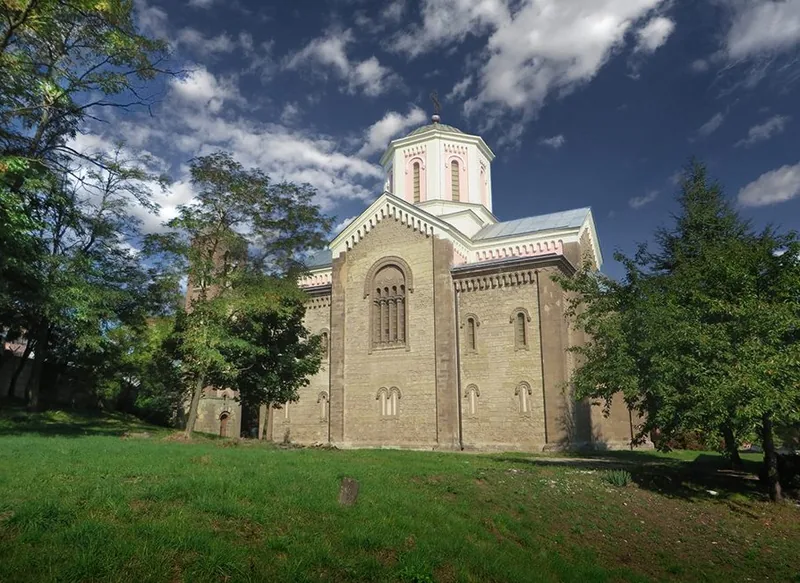
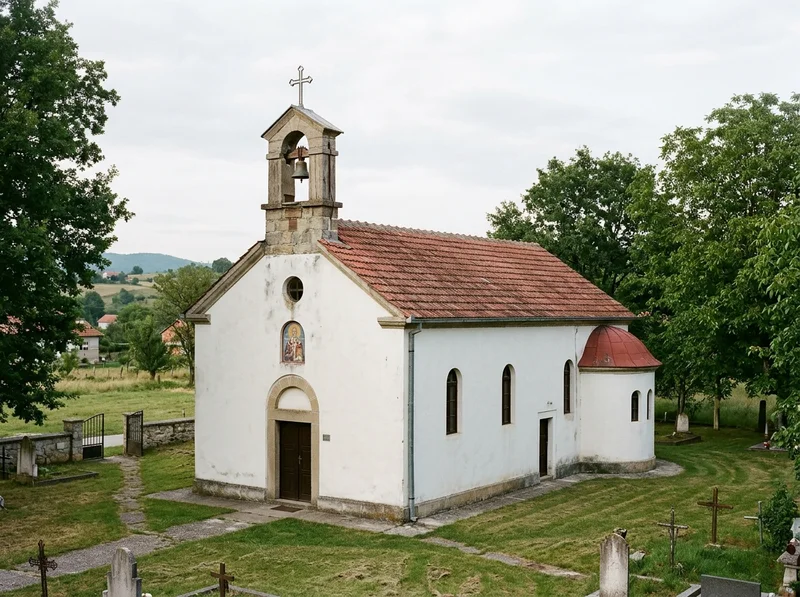
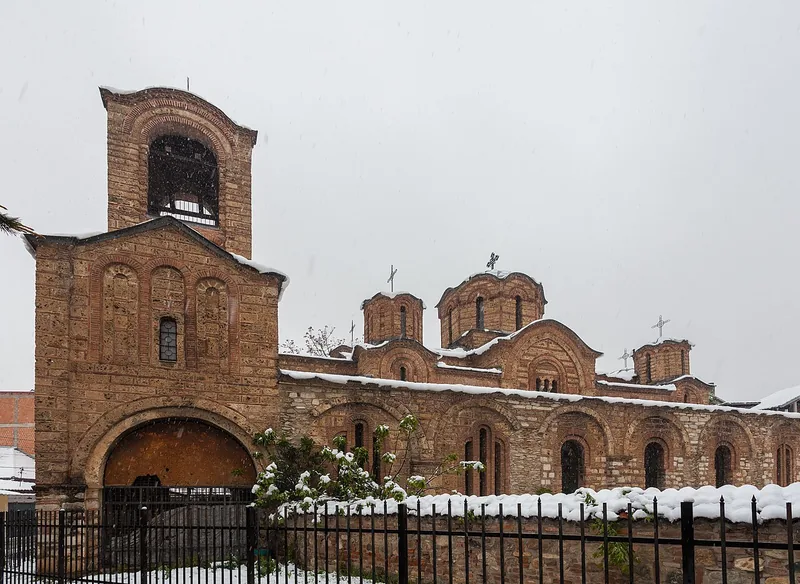
The original site dossiers from the official Reconstruction Implementation Commission (RIC) website, preserved in May and July 2009 archival snapshots, follow a standardised chronological matrix running from the 2004 damage assessments to interventions programmed for 2009. Reading these records accurately requires distinguishing completed protective and reconstruction works (2005–2008) from future plans listed under 2009: whereas the English source explicitly titles the final section 2009 - FURTHER INTERVENTIONS PROGRAMMED, the Serbian translation shortens the heading to 2009 - DALJE INTERVENCIJE ('2009 - Further Interventions'), which can mislead readers into assuming that programmed works such as wall painting restoration had already been executed.
Standard structure of an original 2009 RIC site sheet (2004–2009)
Each individual site page inside /inc/eng/sites/ and /inc/srp/sites/ on the 2009 RIC website was designed as a concise technical summary sheet. At the top of the record is the catalogue number (01 through 35), the monument name, and its municipality or settlement, followed immediately by a brief architectural and historical description specifying the ground-plan type (single-aisled church, three-aisled basilica, cross-in-square or free-cross domed church), century of construction or renewal, presence of wall paintings and auxiliary structures (belfry, parish house, konak, baptistery, graveyard), and legal protection status.
Below the architectural summary, each dossier follows a six-part chronological sequence: (1) 2004 - Damage Assessment (2004 - PROCENA ŠTETE), itemising destruction from March 2004 alongside subsequent thefts of lead roofing in 2005–2006; (2) 2005 - Protective Interventions (2005 - INTERVENCIJE ZAŠTITE), recording Phase 1 emergency clearance, temporary or lead roofing, joinery, and perimeter fencing; (3) 2006 - Reconstruction Works, (4) 2007 - Reconstruction Works, and (5) 2008 - Reconstruction Works (RADOVI NA OBNOVI), listing annual structural works or recording No interventions carried out; and finally (6) 2009 - Further Interventions Programmed (2009 - DALJE INTERVENCIJE).
In several dossiers where minor or localised damage was fully addressed during the initial phase—such as the Church of the Birth of the Holy Virgin in Softović (#13), St Parasceve in Vitina/Viti (#29), Sts Florus and Laurus in Lipljan/Lipjan (#32), and St Kyriake in Brnjača/Bërnjak (#34)—the chronological sequence ends at 2006 with the single entry Completed (Završeno), omitting sections for 2007–2009.
| Original English Heading | Original Serbian Heading | Evidentiary Status in Record | Research Interpretation Guideline |
|---|---|---|---|
| 2004 - Damage Assessment | 2004 - PROCENA ŠTETE | May–July 2004 technical mission findings plus notes on 2005/2006 lead roof thefts | Establishes baseline damage prior to RIC works; entry #24 also notes 1999 destruction. |
| 2005 - Protective Interventions | 2005 - INTERVENCIJE ZAŠTITE | Executed Phase 1 emergency works (autumn/winter 2005) across 30 sites | Physical weatherproofing, clearance, and security fencing—not full restoration. |
| 2006–2008 - Reconstruction Works | 2006–2008 - RADOVI NA OBNOVI | Executed or ongoing Phase 2 structural and architectural works by calendar year | Cross-reference against 2006–2007 tender lists and April 2009. |
| 2009 - Further Interventions Programmed | 2009 - DALJE INTERVENCIJE | Planned/programmed works as of the spring 2009 website update | Must not be cited as proof that fresco or iconostasis restoration was completed in 2009. |
| UNESCO programme (under 2009) | UNESCO program (under 2009) | Reference to external international programming outside the core RIC budget | Indicates institutional overlap or proposed UNESCO-led intervention (#01, #06, #09, #31, #33). |
The linguistic gap between 'Programmed' in English and the Serbian heading for 2009
A systematic comparison of the English and Serbian versions across all 35 dossiers highlights a critical distinction in the final chronological heading. The English text consistently uses 2009 - FURTHER INTERVENTIONS PROGRAMMED, employing standard Council of Europe and European Commission project terminology to denote works scheduled or proposed for future implementation. In the 2009 Serbian translation, the word 'programmed' (programirane or planirane) was omitted from the heading, leaving only 2009 - DALJE INTERVENCIJE ('2009 - Further Interventions') above items such as 'Wall paintings restoration', 'New iconostasis', or 'Archaeological assessment'.
When the Serbian dossier is read in isolation without checking the English parallel text or the May 2009 snapshot timestamp, a researcher can easily misread planned future tasks as completed 2009 works—affecting sites such as Tutić’s Church (#05), St Nicholas in Pristina (#10), St Elias in Vučitrn/Vushtrri (#08), Devič Monastery (#03), St Nicholas in Kosovo Polje/Fushë Kosovë (#17), and the Presentation of the Virgin in Belo Polje (#23). In reality, as of May 2009, these entries recorded remaining conservation needs rather than completed fresco or iconostasis restorations.
Documented case study from RIC records: cross-checking Tutić’s Church (#05) against Current Activities
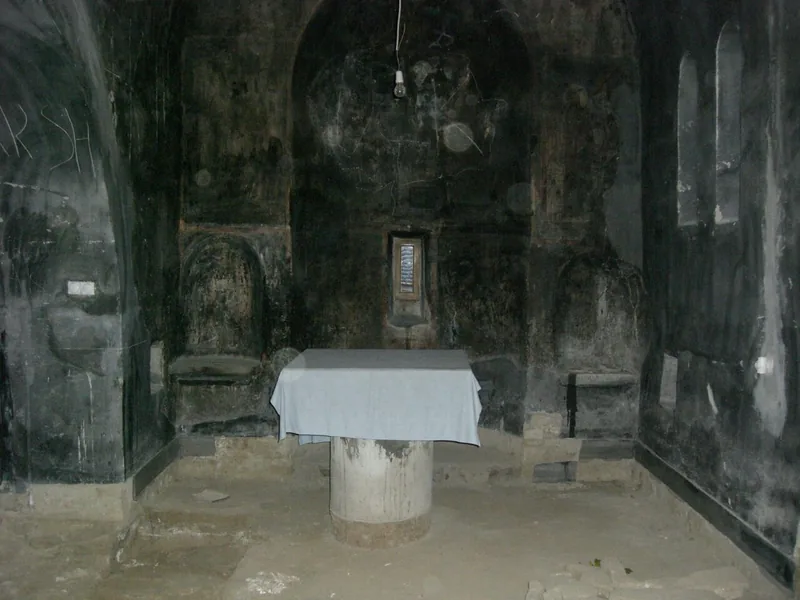
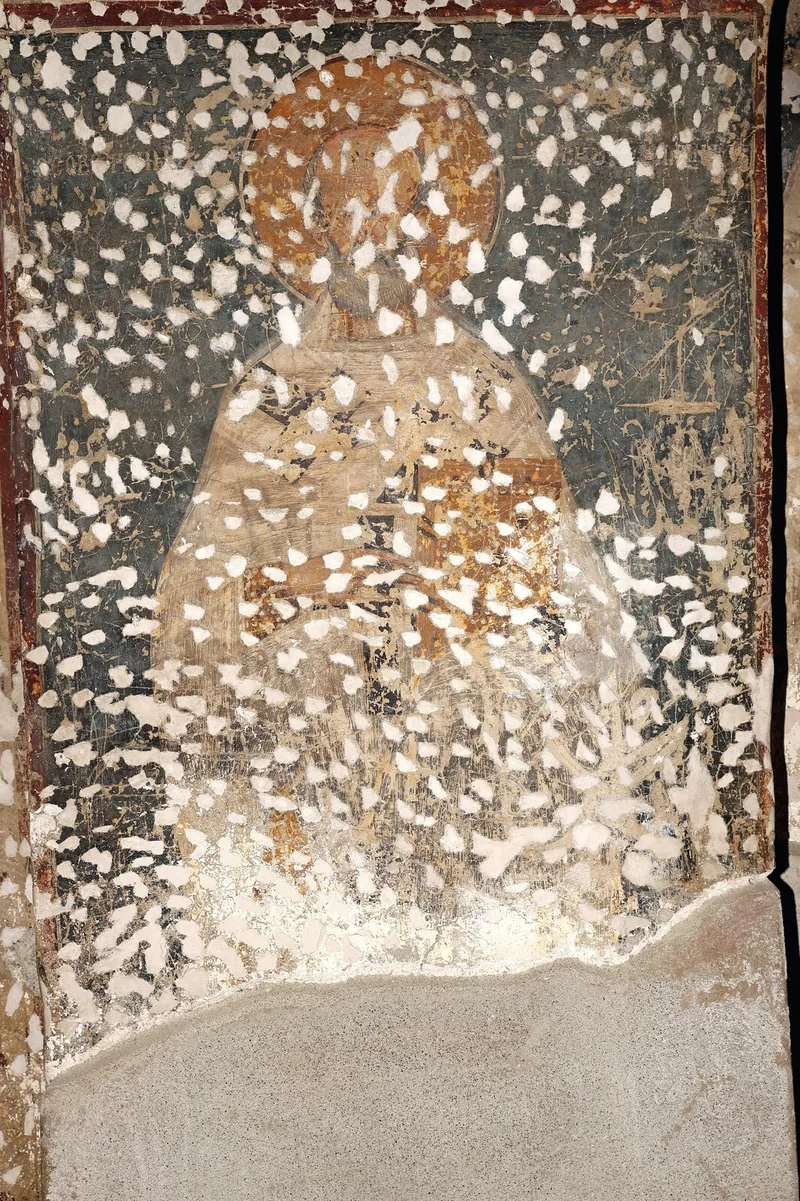
The dossier for the Church of St Nicholas — Tutić’s Church in Prizren (#05) demonstrates why site sheets should be read alongside the RIC tender lists and activity updates. Under 2007, the dossier briefly notes Internal repairs. Electrical installation., followed by No interventions carried out in 2008 and Wall paintings restoration under 2009 - FURTHER INTERVENTIONS PROGRAMMED. Cross-referencing and the April 2009 page reveals the full procedural sequence: an initial 2007 tender for internal repairs to Tutić’s Church and St Kyriake (43000-07-014-5-2-1) was cancelled, after which a combined contract (43000-07-020-5-2-1) covering the Episcopal Church of St George, Tutić’s Church, and St Kyriake was awarded and completed by April 2009—while the restoration of the 14th-century wall paintings remained a programmed future phase.
Frequently Asked Questions
What does '2009 - FURTHER INTERVENTIONS PROGRAMMED' mean in a RIC site dossier?
It denotes conservation or construction works that were planned or scheduled for implementation as of early 2009, not works that had already been completed at the time the webpage was archived.
Why does the English dossier for site #29 (Vitina/Viti) have the heading 'Church of St. Peter and St. Paul, M-Talinovac'?
That is an original 2009 HTML template copy-paste error in, which retained the title from entry #19 (Talinovac), while the Serbian page and all body text and photos correctly describe St Parasceve in Vitina/Viti.
What do the abbreviations 'IPM' and 'DoC' mean in the English site dossiers?
IPM stands for Institute for the Protection of Monuments (Serbian ZZS), while DoC (seen in entry #13 Softović) refers to the Department of Culture within the provisional administrative structure.
How can a researcher verify whether works listed in a dossier for 2006 or 2007 were contracted?
By cross-checking the site dossier against the archived annual tender tables, press releases, and the April 2009 report, which cites exact contract numbers.
Sources and Further Reading
- RIC Archival Page: The Background / Uvod — Reconstruction Implementation Commission (RIC) — archival snapshot (17. maj 2009.)
- RIC Archival Site Dossiers (/inc/{eng,srp}/sites/*.html, May–July 2009) — Reconstruction Implementation Commission (RIC) — archival snapshots (17. maj 2009. / 28. jul 2009.)
- RIC Archival Page: Current Activities / Trenutne aktivnosti — Reconstruction Implementation Commission (RIC) — archival snapshot (april 2009.)